How to Journal Like Marcus Aurelius
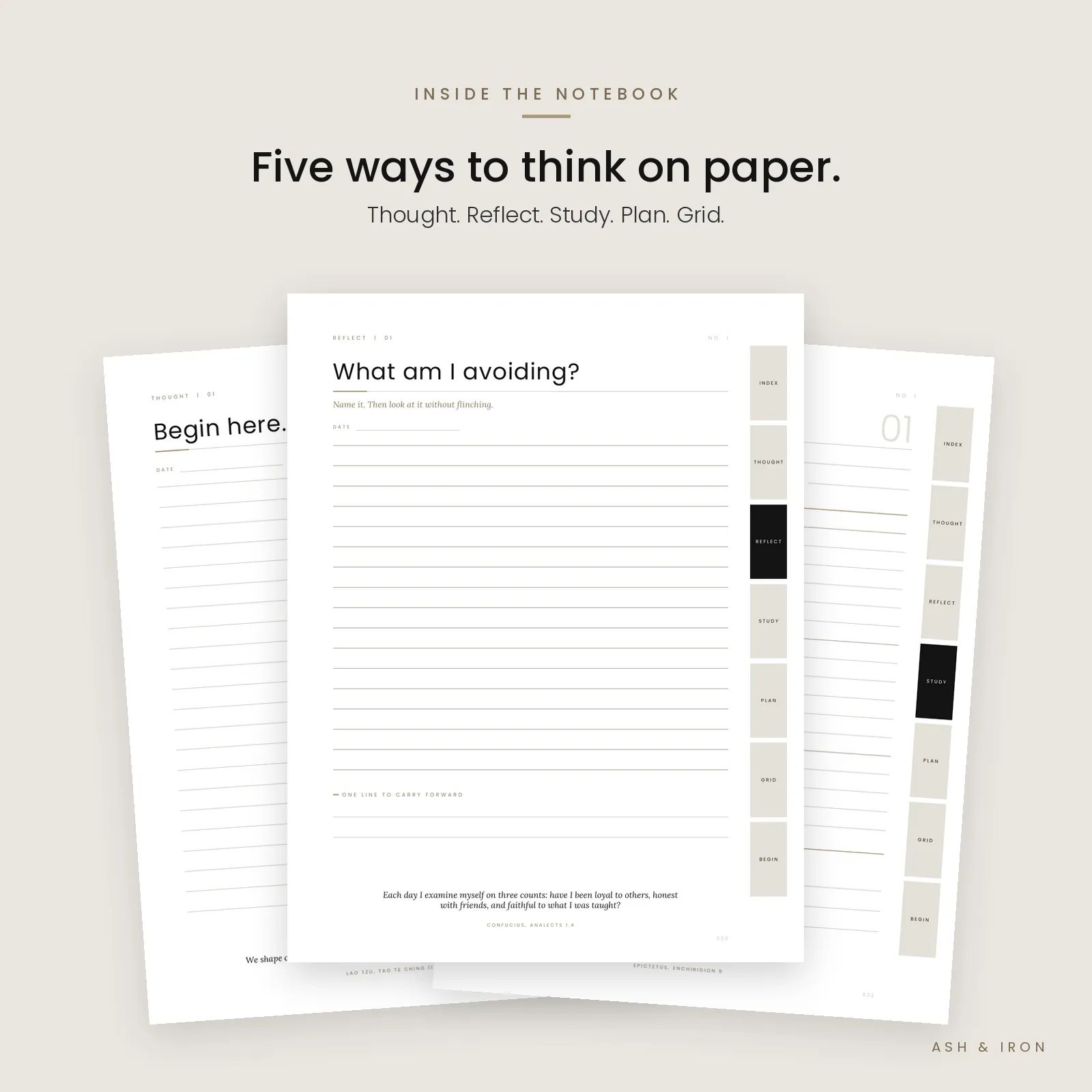
If you want to journal like Marcus Aurelius, start with a surprising fact: the Meditations was never written for readers. It was a private notebook, a set of notes an emperor wrote to himself to stay steady under pressure. That is what makes it so powerful, and it is the model for a journaling practice that actually changes you.
Write to yourself, not an audience
Marcus addressed himself directly and without polish. Write the true thing, not the impressive thing. A journal nobody will read is the one place you can be completely honest.
Return to a few principles
The same ideas appear again and again in the Meditations. That repetition was the point. As he put it, “Let thy principles be brief and fundamental.” Keep a short list of your own and rewrite it often until it becomes part of you.
Ask better questions
Guided questions cut through vague reflection. What am I avoiding? What would I do if I were not afraid? Answer slowly, and come back to the same question a month later to see what changed.
Study, then summarize in your own words
Marcus filled the first book of his notebook with lessons learned from the people around him. When you read something worth keeping, write the key idea and a summary in your own words. That is how reading becomes character. “Such as are thy habitual thoughts, such also will be the character of thy mind; for the soul is dyed by the thoughts.”
A notebook made for this practice
Our What Survives The Fire Stoic notebook has a section for each of these habits: lined pages for free writing, twelve guided reflection questions, Cornell pages for study and an index so you can always return to what you wrote. Explore more in the notebook collection, or read the Meditations free on Project Gutenberg.